User Personas and Needs
At the heart of Baim B’Tov are two distinct user types - not separate system roles, but two clearly differentiated personas with unique needs, behaviors, and expectations.
The matchmaker is always represented by a circle.
Candidates are visually distinguished by square elements throughout the app
THE MATCHMAKERS
The primary users. Volunteers, often from traditional communities, who invest time and care into helping others.
They rely on informal tools and are not necessarily tech-oriented.
Their needs:
- A simple, non-intimidating interface.
- A tool that supports rather than replaces their judgment.
- Clear visual organization across multiple candidates.
THE candidate
The app nickname for the singles. Not direct users, but central to the system.
Their presence must be handled with sensitivity.
Their needs:
- Privacy and minimal exposure.
- Representation through trusted intermediaries.
- Respectful and accurate portrayal.
Case Study 01
Designing a Matchmaking App
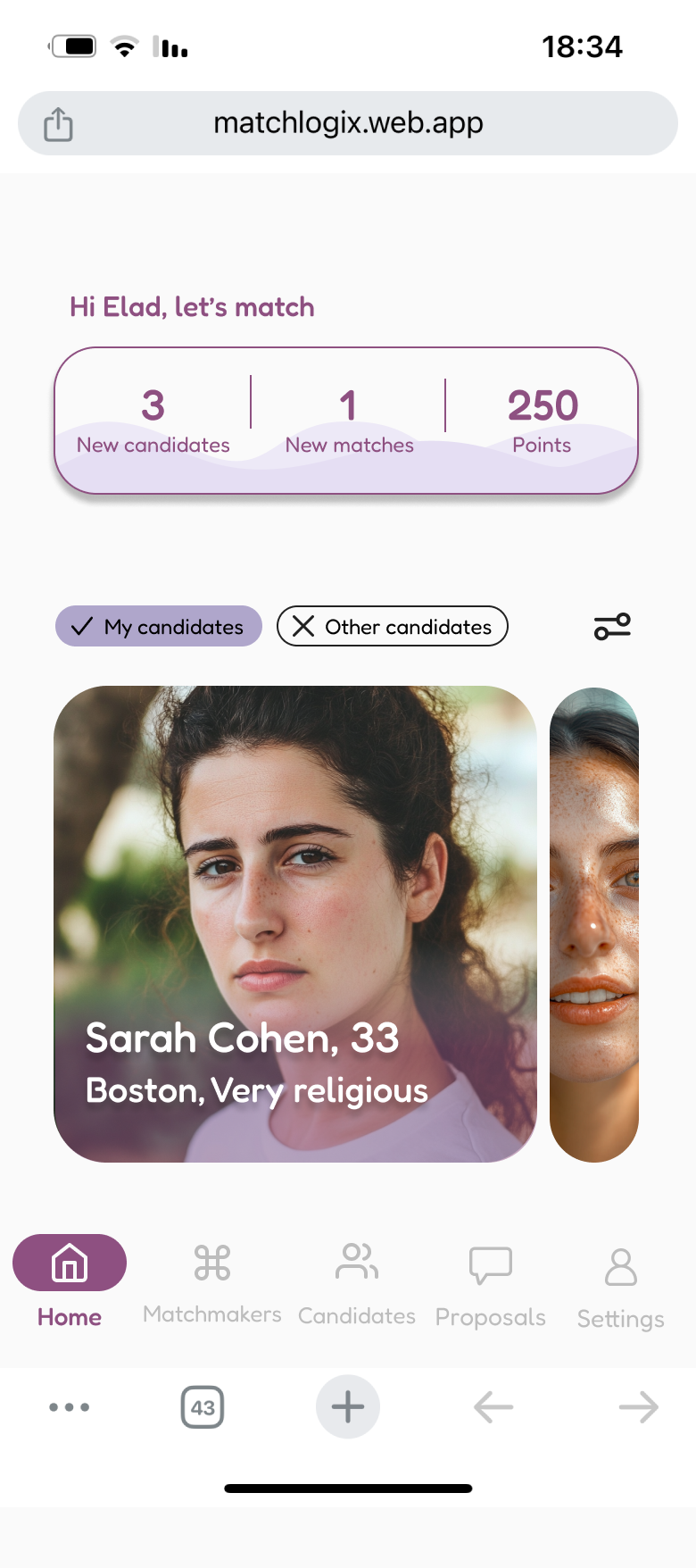
Baim B’Tov is a nonprofit that supports community-based matchmaking in Israel. I joined to lead UX research, product strategy, and UI design for a new app - not for singles, but for the matchmakers working behind the scenes.
This case study presents the design journey: understanding the needs of volunteer matchmakers, shaping intuitive flows, and creating a respectful, culturally aligned experience.
Browse The Web App
THE CHALLENGE
Supporting Tradition with Better Tools
Matchmaking in this community is not transactional. It is personal, trust-based, and often handled through fragmented tools - notes, spreadsheets, WhatsApp threads, and memory.
The challenge was not to replace this system, but to support it.
We needed to design a tool that brings clarity and structure, while preserving human judgment, discretion, and trust.
The system was designed to:
- Bridge tradition and technology without disrupting existing behaviors.
- Protect sensitive data and maintain discretion.
- Make matchmaking clearer, faster, and easier to manage.
my ROLE
I joined the Baim B’Tov project at the early research stage. As the research evolved, I identified core issues and led a full UX and UI - from redefining the user journey to preparing the product for development.
Hungry for some drama? Jump to 'Wrong Number' to see how we handled our biggest challenge.
Drama Me!
Exploration
Understanding the Ecosystem
A qualitative study conducted by the organization included 485 singles aged 25-40 from the target community.
The singles


of people aged 30–50 are single.
13%


A general lack of matchmaking proposals
32%
Lack of quality proposals
48%
Personal emotional barriers
12%
Despair, heaviness
5%
Lack of tools and knowledge
12%
Other
3%


23%
67%
Not enough proposals
Enough proposals
Yearly matchmaking propovsals
of singles want society to be more involved in finding solutions.
of singles prefer to meet their partner through family or friends.
75%
71%

the matchmakers
Know between 3-5 “later-stage” singles
The issue matters to them
Actively engaged with the issue

48%
A lack of tools results in limited engagement
Insights
THE MATCHMAKERS
- Know many relevant singles.
- Are motivated to help.
- Lack structured tools to do so effectively.
THE SINGLES
- Prefer discretion and low visibility.
- Trust introductions through personal networks.
- Want to be represented respectfully.
DESIGN PRINCIPLES
Designing for Tradition
This product was designed for a traditional audience that values trust and simplicity over advanced technology.
To reduce friction, we focused on:
- A clean and familiar interface.
- Gradual onboarding.
- Light and purposeful gamification.
- Use of familiar interaction patterns.
We intentionally avoided automation and AI-driven matching.
Instead, the system supports:
- Human judgment.
- Community knowledge.
- Relationship-based decisions.
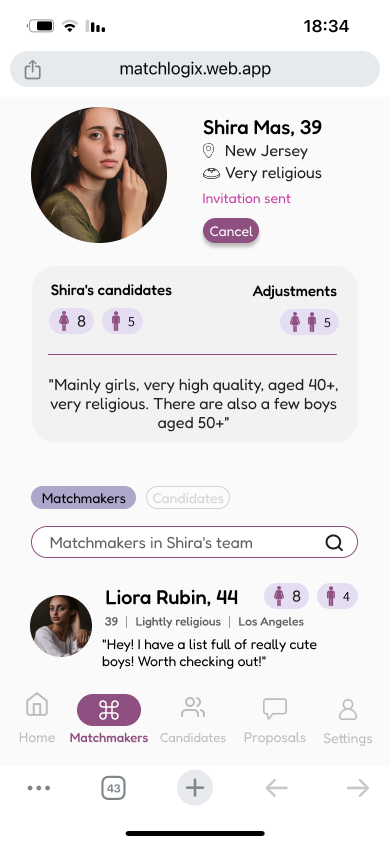
Relationship-based decision making.
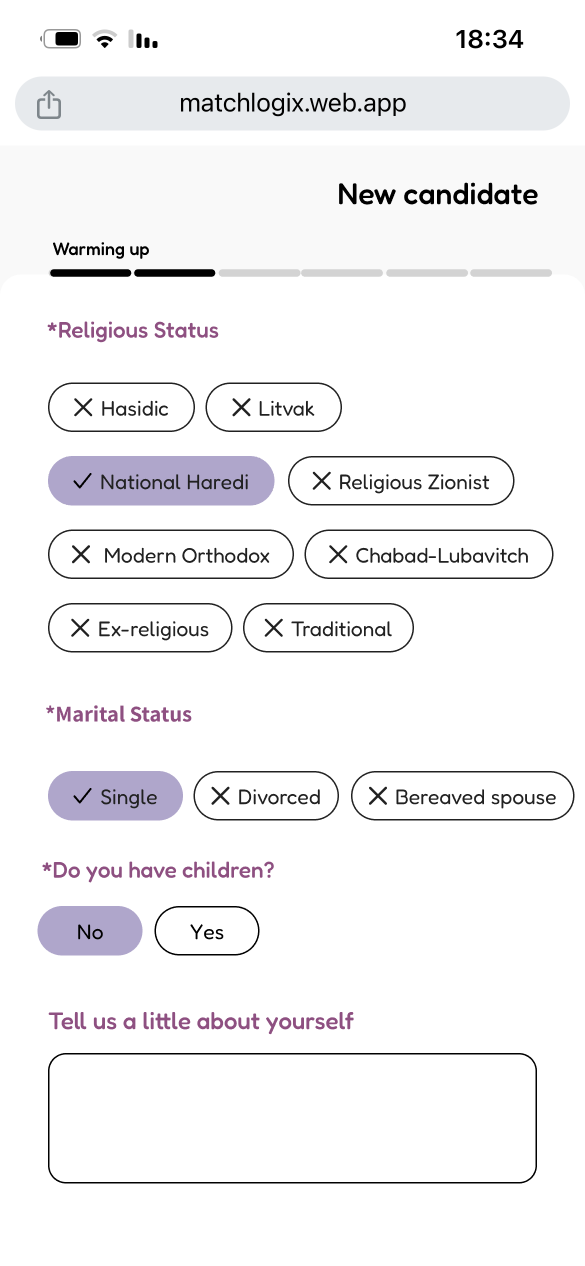
A familiar interface, not AI-driven (MVP).
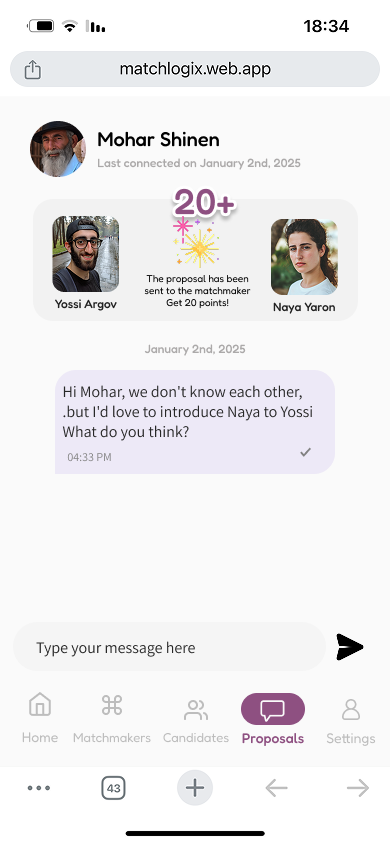
Gamification and a lighthearted atmosphere.
problem solving
Simplifying Candidate Creation
Adding a candidate was initially straightforward in structure, but demanding in practice.
The process required detailed information that matchmakers often did not have, making it slow and frustrating.
User testing confirmed the issue, especially when adding multiple candidates.
Exploring Solutions
One direction was to let candidates create their own profiles.
Pros:
Reduced workload for matchmakers.
Cons:
Asking candidates to describe themselves felt uncomfortable.
The Solution
Instead of choosing one approach, we supported both.
- Matchmakers can create profiles themselves.
- Or invite candidates to create their own.
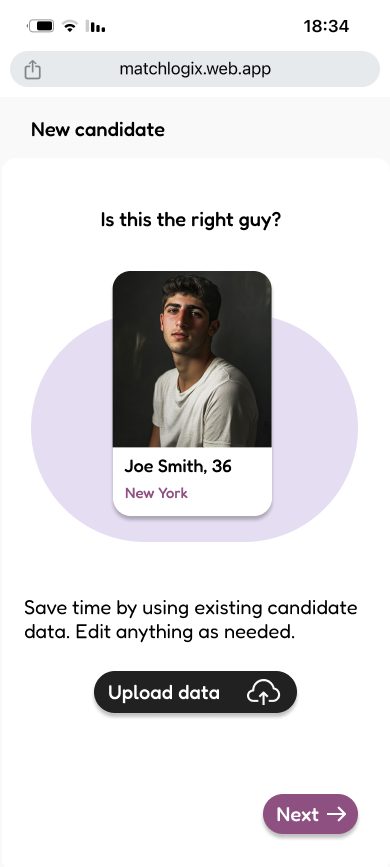
Additionally, we enabled reuse and editing of existing profiles.
This reduced friction while preserving trust and flexibility.
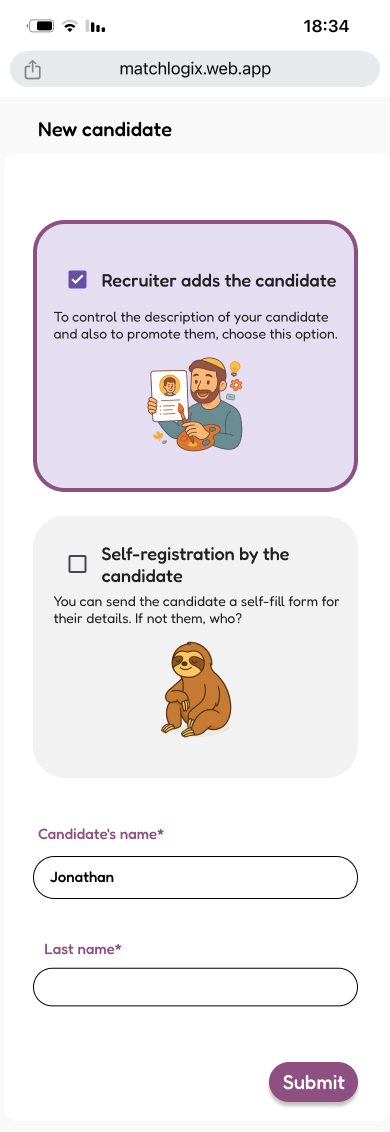
Another simple and effective solution was allowing matchmakers to reuse and edit existing candidate profiles.
The Pivot
Wrong Number: Re-thinking the Invite Flow
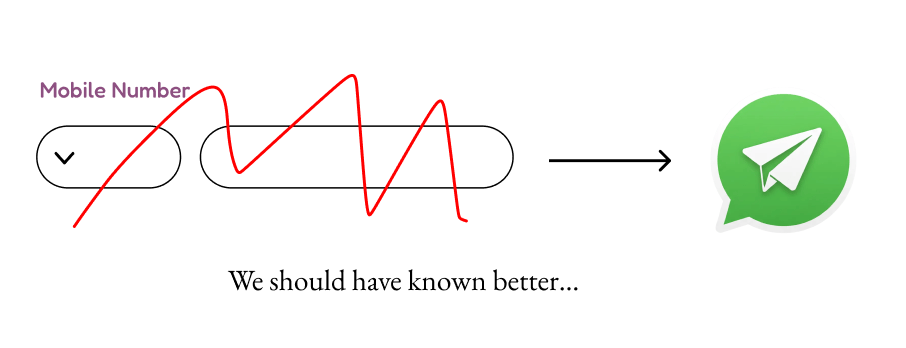
The challenge: To enable a one-click join, matchmakers were required to manually enter phone numbers.
We optimized for candidate convenience - at the expense of the matchmaker.
The Insight:
User testing showed that matchmakers disliked manual entry.
It was slow, error-prone, and led to failed invitations.
The Pivot:
We reversed the flow.
Instead of entering the candidate’s phone number, matchmakers share a dynamic invite link via WhatsApp.
The candidate enters their own number.
The Win: Zero Typos: People don't mistype their own numbers.
- No Drop-offs: We feared friction, but data showed candidates were happy to provide their details for a trusted match.
- Control: Matchmakers now manually approve candidates after they sign up, keeping the database secure.

impact
Something new is happening
As of February 2026, the product is in beta.
- Over 100 matchmakers and more than 200 candidates have joined the platform.
- Dozens of matches have already been made.
- Some have progressed to real-life dates.
- Still waiting for the first wedding.
User Personas and Needs
At the core of the system are two distinct personas - not system roles, but different perspectives.
Matchmakers are visually distinguished by circular elements throughout the app
Candidates are visually distinguished by square elements throughout the app
THE MATCHMAKERS
The primary users. Volunteers, often from traditional communities, who invest time and care into helping others.
They rely on informal tools and are not necessarily tech-oriented.
Their needs:
- A simple, non-intimidating interface.
- A tool that supports rather than replaces their judgment.
- Clear visual organization across multiple candidates.
THE candidate
The app nickname for the singles. Not direct users, but central to the system.
Their presence must be handled with sensitivity.
Their needs:
- Privacy and minimal exposure.
- Representation through trusted intermediaries.
- Respectful and accurate portrayal.
Case Study 01
Designing a Matchmaking App
Baim B’Tov is a nonprofit that supports community-based matchmaking in Israel. I joined to lead UX research, product strategy, and UI design for a new app - not for singles, but for the matchmakers working behind the scenes.
This case study presents the design journey: understanding the needs of volunteer matchmakers, shaping intuitive flows, and creating a respectful, culturally aligned experience.
Browse The Web App
Yet to be suited with desktop.

Best viewed on mobile
THE CHALLENGE
Supporting Tradition with Better Tools
Matchmaking in this community is not transactional. It is personal, trust-based, and often handled through fragmented tools - notes, spreadsheets, WhatsApp threads, and memory.
The challenge was not to replace this system, but to support it.
We needed to design a tool that brings clarity and structure, while preserving human judgment, discretion, and trust.
The system was designed to:
- Bridge tradition and technology without disrupting existing behaviors.
- Protect sensitive data and maintain discretion.
- Make matchmaking clearer, faster, and easier to manage.
my ROLE
I joined the project at an early research stage and led the product from insight to execution - defining the user journey, shaping the experience, and preparing the product for development.
Hungry for some drama? Jump to 'Wrong Number' to see how we handled our biggest challenge.
Drama Me!
Exploration
Understanding the Ecosystem
A qualitative study conducted by the organization included 485 singles aged 25-40 from the target community.
The singles
of people aged 30–50 are single.
13%
A general lack of matchmaking proposals
32%
Lack of quality proposals
48%
Personal emotional barriers
12%
Despair, heaviness
5%
Lack of tools and knowledge
12%
Other
3%
23%
67%
Not enough proposals
Enough proposals
Yearly matchmaking propovsals
of singles want society to be more involved in finding solutions.
of singles prefer to meet their partner through family or friends.
75%
71%

the matchmakers
The matchmakers are, in fact, all of us.
Know between 3-5 “later-stage” singles
The issue matters to them
Actively engaged with the issue
48%
A lack of tools results in limited engagement
Insights
THE MATCHMAKERS
- Know many relevant singles.
- Are motivated to help.
- Lack structured tools to do so effectively.
THE SINGLES
- Prefer discretion and low visibility.
- Trust introductions through personal networks.
- Want to be represented respectfully.
DESIGN PRINCIPLES
Designing for Tradition
This product was designed for a traditional audience that values trust and simplicity over advanced technology.
To reduce friction, we focused on:
- A clean and familiar interface.
- Gradual onboarding.
- Light and purposeful gamification.
- Use of familiar interaction patterns.
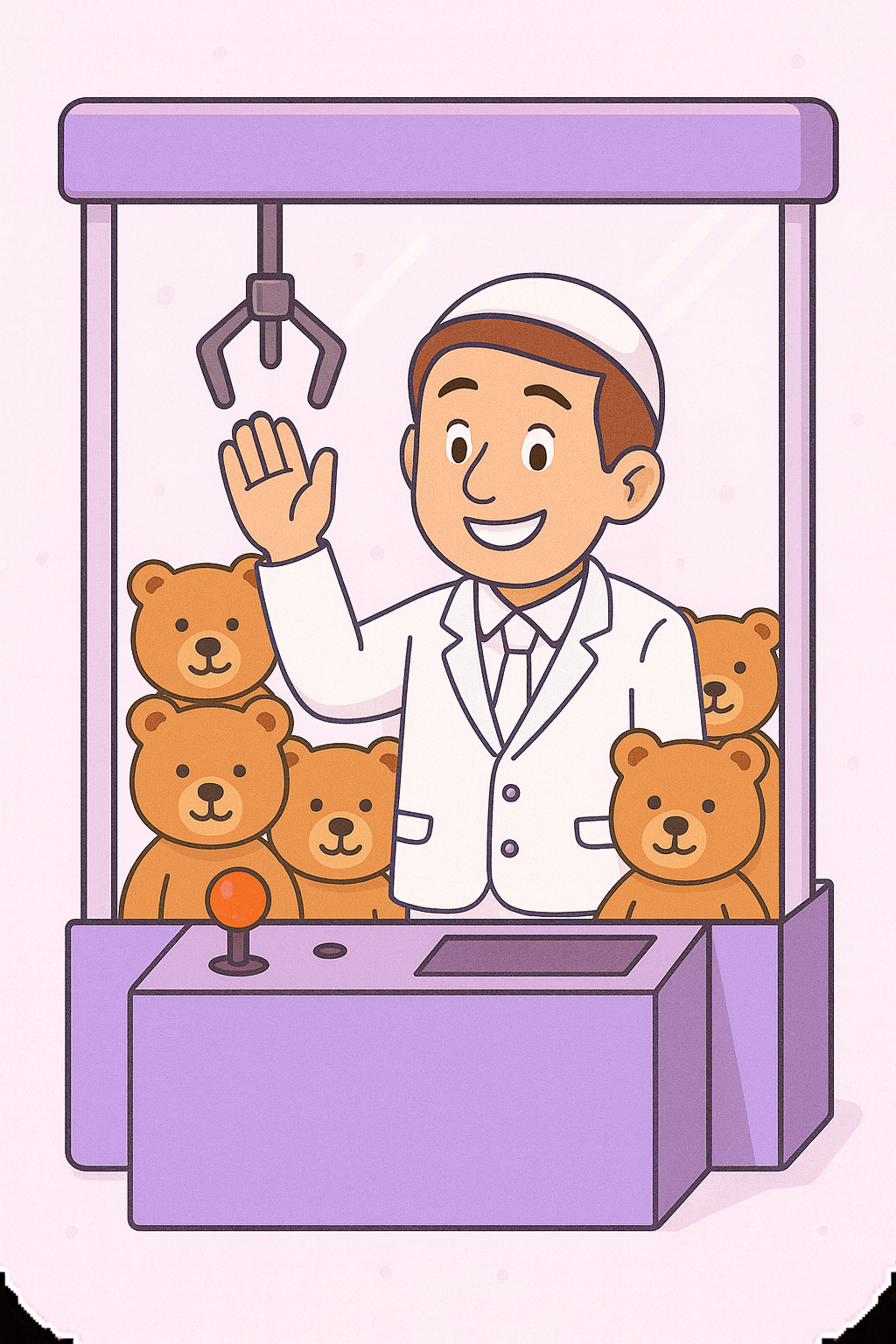
We intentionally avoided automation and AI-driven matching.
Instead, the system supports:
- Human judgment.
- Community knowledge.
- Relationship-based decisions.
A familiar interface, not AI-driven (MVP).
Gamification and a lighthearted atmosphere.
Relationship-based decision making.
PROBLEM SOLVING
Simplifying Candidate Creation
Adding a candidate was initially straightforward in structure, but demanding in practice.
The process required detailed information that matchmakers often did not have, making it slow and frustrating.
User testing confirmed the issue, especially when adding multiple candidates.
Exploring Solutions
One direction was to let candidates create their own profiles.
Pros:
Reduced workload for matchmakers.
Cons:
Asking candidates to describe themselves felt uncomfortable.
The Solution
Instead of choosing one approach, we supported both.
- Matchmakers can create profiles themselves.
- Or invite candidates to create their own.
Additionally, we enabled reuse and editing of existing profiles.
This reduced friction while preserving trust and flexibility.
Another simple and effective solution was allowing matchmakers to reuse and edit existing candidate profiles.
The Pivot
Wrong Number - Rethinking the Invite Flow
The challenge: To enable a one-click join, matchmakers were required to manually enter phone numbers.
We optimized for candidate convenience - at the expense of the matchmaker.
The Insight:
User testing showed that matchmakers disliked manual entry.
It was slow, error-prone, and led to failed invitations.
The Pivot:
We reversed the flow.
Instead of entering the candidate’s phone number, matchmakers share a dynamic invite link via WhatsApp.
The candidate enters their own number.
We should have known better...


Mobile Number


The outcome:
- Fewer errors - people do not mistype their own number.
- Higher completion rates.
- Better control - matchmakers approve candidates after registration.
impact
Something new is happening
As of February 2026, the product is in beta.
- Over 100 matchmakers and more than 200 candidates have joined the platform.
- Dozens of matches have already been made.
- Some have progressed to real-life dates.
- Still waiting for the first wedding.